| Home |
 |
Isabella Martin, Part 4 |
|
 |
|
While she occasionally dropped hints about going on stage again, Isabella Martin stuck by the statement she gave a reporter before leaving New York City in 1897: "I have decided to abandon the stage because I find that a woman cannot maintain her respectability and continue in the profession." Perhaps more to the point was the first half of the next thing she said: "I have lost all my money in attempting to elevate the drama." After returning to California, she managed to be a frequent subject of newspaper stories, but, again, often as comic relief. That would change within a few years when the eccentric woman became so embittered she posed a threat of everyone around her. Eventually, she wound up behind bars. Overlooked in the coverage of her return to California in 1897 was her domestic situation. After posing as a concerned mother during a long and fruitless attempt to grab a chunk of her late brother-in-law's estate for "Baby John," then three years old, she left the boy behind when she she went to New York City to pursue her dream. She was gone more than a year and I saw no mention of who cared for the boy in her absence. Henry, her son by first husband Jacob Hoffman, turned 21 in 1897, but most likely had little to do with his brother, perhaps because he knew "Baby John" really wasn't his mother's child. ACCORDING to an item in the Oakland Tribune (March 31 1897), Isabella was interviewed within an hour of her arrival home from New York and was asked questions about "Durrant, Charlie Fair, and the Oakland race track." She wasn't asked how she felt to be reunited with "Baby John" or Henry. You could write a book about how the media provides celebrities of all sorts with a forum for their opinions on things beyond their scope. There seemed to be no topic that was off-limits for Isabella; the press enjoyed letting her spout off. William Henry Theodore Durrant, known as "The Demon of the Belfry," was accused of two murders committed at San Francisco's Emmanuel Baptist Church, where he was assistant superintendent of the Sunday School. He maintained his innocence, and Isabella Martin believed him. She set herself up as an authority on the case. She'd do the same with a few other California murders, perhaps in a desperate bid to remain in the spotlight as part of her fantasy about being a lawyer, championing the underdog. (She was in the minority about Durrant; he was convicted, and, in 1898, was executed by hanging.) Asking Mrs. Martin about Charlie Fair was logical — if you were trying to annoy her just a bit. Charles Lewis Fair was the ne'er-do-well son of James G. Fair, one of the country's wealthiest men, thanks to his financial interest in the Comstock Lode, the first important discovery of silver ore in the United States. James Fair went on to become a United States Senator from Nevada. He disinherited son Charlie, leaving everything to his two daughters. Upon his father's death, Charlie contested the will. He made out better than Mrs. Martin did in her case. That's because Charlie Fair's sisters, already wealthy, decided to be generous to their brother. Each gave him part of her inheritance. |
|
|
|
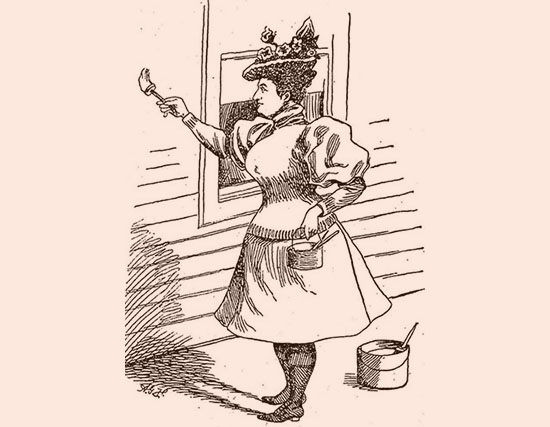
It also was understandable that Isabella Martin would be asked about the Oakland race track, because, during the 1894 will case, Isabella was cross-examined about how horse races were part of her 1891 trip to New York. Supposedly pregnant and about to give birth, she spent much of her time in New York at the Sheepshead Bay races, even writing to a friend and former lover in San Francisco, asking for $2,000 to bet on horses. On at least one occasion, she went to the races with Josephine Plows-Day, the actress who arranged for Isabella to buy "Baby John." To any California reporter who would listen, she gave a glowing account of her experiences in New York, displaying a level of delusion and a lack of self-awareness that reminded me of a certain fellow who is obsessed with building a ballroom at the White House. And the mysterious Col. James, the man who was her Sugar Daddy during her New York stay, well, according to Isabella, he proposed marriage, but she decided he was too old. TWO MONTHS after her return to California, Isabella had other things on her mind. Among them: She wanted to spruce up her Oakland property, but found herself in a labor dispute, which the press reported tongue in cheek: |
|
|
|
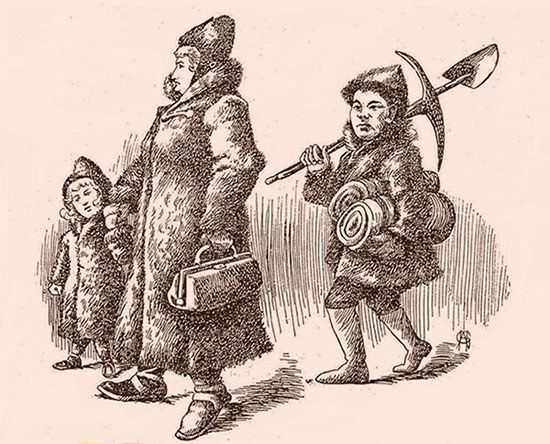
| Then, three month later, Mrs. Martin, apparently done with painting, announced she was going to look for gold in Alaska: | |
|
|
The San Francisco reporter who wrote this story never explained just when Mrs. Martin had found time to travel extensively in Canada and Siberia. There is no evidence she'd ever been to either place. Also notice the illustration makes "Baby John" look like a little girl. He had shoulder-length hair at the time and was often forced to wear a dress. In another article, Mrs. Martin claimed she wouldn't return from Alaska until she had a million dollars. I found no story that indicated she, "Baby John" and her Chinese cook ever did go to California. Instead, Mrs. Martin took up residence in one of her Oakland properties, although she spent much time in Weaverville, where she wasn't particularly welcome. The local newspaper had long found her downright tiresome: |
|
|
|
| But more than occasionally, Isabella Martin's antics deserved to be covered — and were, even in the Examiner and Chronicle — because she spent a lot of time in courtrooms: | |
|
|
In December, 1899, Mrs. Martin was a defendant in search warrant proceedings brought by R. L. Hanson, whose family lived in one of several houses on Sixth Street in Oakland owned by the woman. Hanson was behind on his rent and claimed his landlady, in retaliation, had removed items from his apartment. He secured a search warrant and two city detective entered Mrs. Martin's apartment to look for Hanson's property. Mrs. Martin, acting as her own attorney, claimed the detectives broke in, destroyed her locks and left her "at the mercy of the burglars who have been prowling around at night." She also insinuated some of her property was taken, including a revolver she kept under a pillow on her bed. MONTHS LATER, after spending time at her cabin at her mining claim near Weaverville, she had some business in San Francisco, wanted to go by herself, and this time decided "Baby John" was old enough to take care of himself. Thus she lost any chance of being named mother of the year: |
|
|
|
Three weeks later Isabella returned to Weaverville and petitioned the Supreme Court to have "Baby John" released from the Trinity County Poorhouse and restored to her care. It was decided no petition was necessary; the boy was free to leave. He had expressed some reservations about returning to Mrs. Martin, but with some reluctance, he did. If only he knew the plans she had for him. For awhile, she and " Baby John" bounced back and forth from Weaverville to Oakland, and in late 1901, while they were away from her mining property, their cabin was burned to the ground. She believed, probably correctly, that the cabin was torched by her enemies. She valued the loss at $2,000 and said that when she needed to stay in Weaverville, she and "Baby John" would sleep in tents, though, in truth, she would have preferred living in town's New York Hotel until a new cabin could be built. But she and the hotel operator had never gotten along and he wanted nothing to do with the woman. She responded in typical fashion: |
|
|
|
Morris and his wife, Mary, had testified for May Martin during the will case. Morris also owned a sawmill located near Isabella's mine, and in 1900, he wanted to re-open an old road that happened to be close to her property. She opposed the idea, but Morris sent a man and a wagon to clear the road anyway. Mrs. Martin showed up, carrying a double-barreled shotgun and ordered the man to stop — or else she'd shoot. The man knew she was serious , so he left. (A year later, armed with a revolver, she took three shots at a man in front of her house in Oakland. She told police she was sure the man wanted to kidnap "Baby John.") As for her 1902 lawsuit against Morris, that came to nothing, but by 1903, Morris had sold the hotel. IN JUNE, 1903, there was a hint of things to come for Isabella Martin: |
|
|
|
I found no story on how this case was resolved, but I wouldn't be surprised if the matter were dropped. Judges had precious little experience dealing with women, especially as lawyers, and perhaps no one — male or female — was as combative in court as Isabella Martin. But her time was running out. “I have toiled early and late to make my property a success,” Mrs. Martin told a reporter, “and I am more than pleased with the results. There have been many disappointments to work against, but I determined not to yield to them, and I didn’t. We have constructed a road a mile long. I now employ ten men during the working season and cook for them myself. AS USUAL, Isabella had her own reality. For the next two years she'd spend more time plotting against some judges and all of the residents of Weaverville. What finally set her off may have been a court case she lost in October, 1905. |
|
|
|
The fire occurred in 1902. Not satisfied with the insurance company's response, she filed a suit against them in May, 1903. She insisted the building was a total loss and was entitled to the full $1,200. The insurance company disagreed and offered her $500. She refused the offer and in her unsuccessful suit to receive the full $1,200, she asked for an additional $25,000, plus $500 for every day the lawsuit kept her away from her mining property in Trinity County. Like most of the lawsuits she filed, this one was considered ridiculous, though she managed to drag it on. She resorted to a favorite tactic when she sensed things weren't going her way — she suffered convenient illnesses. The two judges involved in the case lost patience and one of them finally ruled against her, though she wasn't present at the time. Both Judge Sargent and Judge Waste went on Isabella's enemy list and in 1908 they would learn she had plotted to kill them. She remained obsessed with making the insurance company pay the money she insisted was due her. And in 1907, things came to a head when Isabella, accompanied by "Baby John," then 16-years-old, went across the country to New York City so she could confront George R. Crawford, president of the Westchester Fire Insurance Company. She made repeated efforts to see Crawford at his office in the city and at his home in Brooklyn, but was turned away each time. During one visit, she declared that if she was refused justice, she would kill Crawford. THAT WAS in June. Then, in August, she and "Baby John" showed up in Elmira where she brought action to receive what she claimed was unpaid alimony at $50 per month from her first husband Jacob Hoffman, now a successful farmer in Michigan. Mrs. Martin claimed she was owed $20,000. The actual amount was $20,000 less than that, but she believed you couldn't blame her for trying. She certainly could have used the money because five months earlier, Isabella, using "Baby John" to deliver the weapon, committed the crime that would, in 1908, put her in prison. At the time this crime occurred, however, only one persons suspected Isabella was responsible: |
|
|
|
The article went on to make several points: • At the time Judge Ogden was attending a meeting of the Knights Templar at the Masonic Temple. • His wife and four children were home, the two sons already retired. Mother and daughters were in the library. • The bomb was placed on front steps. There was a long fuse, perpetrator had at least five minutes to escape before explosion. That fuse didn’t set fire to anything is due to fact it burns only the powder on the inside and does not burst into a flame. • The motive was puzzling. Anarchists were not suspected. Judge Ogden believes some insane person is responsible. According to the tribune, Judge Ogden was known for his kind heart and leniency. During the many years Judge Ogden has occupied the bench, he had never meted out harsh sentences and the probability of some former convict having conceived the dynamiting in a spirit of revenge is not seriously considered. While police and Judge Ogden claimed to have no idea who would do such a thing, Mrs. Ogden believed the culprit was Isabella Martin because her husband had received threatening, unsigned letters. The judge's wife was sure Mrs. Martin had written those letters. And when the trial finally began, there were days when Isabella must have had a deja vu experience because the witnesses were handwriting experts who were sure she had written the threatening letters. WHEN Isabella first became a suspect, in January 1908, she could blame it on snow. She'd sent "Baby John" to set fire to a barn belonging to her longtime nemesis, the Morrises. "Baby John" was arrested when police followed footsteps in the snow from the barn back to the Martin's cabin. After standing mute for a day or two, Baby John broke, and told police everything he and his mother had done — and what she planned to do in the future. Police were stunned by the boy's confession. In February, "Baby John" was taken from Weaverville to Oakland, where he led police to a bomb that had been buried near the Martin residence. According to the Oakland Tribune, "the bomb contained 25 pounds of stick dynamite encased in a box about 15 inches long and 10 inches deep. The bomb was encased in a burlap bag. It would have been sufficient to blow up the largest part of a city block. 'Baby John' said the bomb was prepared to blow up Judge George Samuels of Oakland." A day later, the newspaper reported that Oakland fire department officials believed Mrs. Martin tried on at least three occasions to burn down her house and adjoining houses she owned at 20th and West Streets. She also was suspected of starting a fire in 1901 that damaged the home of the city's prosecuting attorney, Abe Leach. Tracks made by tiny feet were found at the place, presumably belonging to "Baby John," but at the time other youngsters were suspected. However, Leach refused to press charges against them. THANKS TO "Baby John's" confession, Isabella Martin was locked up, pending the first of two trials it would take to put her away for good. Even behind bars, the woman put up a fight, though it was a losing one, something that was obvious to everyone but her. The San Francisco Call (February 12, 1908) summarized "Baby John's" confession and recalled a recent scam Isabella had attempted through a claim the boy was actually the son of a woman known as Princess Chimay, better known as Clara Ward, a wealthy American socialite who'd married Joseph, Prince de Caraman-Chimay of Belgium. This "prince" was not royalty, but merely a member of a respected aristocratic family that had no claim on any throne. Mrs. Martin had hoped, as she had in 1894, to use "Baby John" to obtain money, not from the Belgian family, but from Clara Ward's more wealthy family in Detroit. But Isabella's claim was patently ridiculous. Not ridiculous were the fiendish plots revealed to police by 16-years-old John Bidwell Martin. He confessed to setting fire to Oakland cottages owned by Mrs. Martin, including the fire from which she tried unsuccessfully to collect on a policy with the Westchester Insurance Company of New York. The boy also confessed to placing he bomb at Judge Ogden's house and said Mrs. Martin planned to blow up the homes of several judges. He said at least two failed attempts had been made to dynamite the home of Judge George Samuels. He said Mrs. Martin got her bomb-making idea by reading the testimony of Albert Edward Horsley, a miner better known by his pseudonym, Harry Orchard, who used a bomb to assassinate Governor Frank Steunenberg of Idaho in 1905. THE BOY said he was forced to go along with the woman because she had repeatedly threatened to kill him if he refused. For most of his life the boy wore his hair in long curls and often wore dresses, his mother thinking no one would be suspicious of a girl spotted near the scene of a fire or a bombing. Recently, however, he has worn his hair short. According to the Tribune, another plot was to kill Postmaster Paulsen of Weaverville, against whom Mrs. Martin had a grudge. "Baby John" was to place a bomb in an envelope, which was to be mailed. In postmarking the letter, Postmaster Paulsen would stamp the contraption hard enough to cause it to explode, but the attempt wasn't made. Another plot was to poison a man named Lauk, who lived on Browns Creek near Mrs. Martin's mine. CALLED by some the most remarkable female criminal since Cassie Chadwick, Isabella Martin had something in common with the Canadian-born con woman — both were suspected of having hypnotic powers. How else, police wondered, did Isabella have such power over "Baby John"? But that power disappeared as soon as the boy was arrested. Whether everything he said was true, police didn't know, but soon they gathered evidence to support most of the boy's confession, and this was more than enough to put his putative mother in prison and guarantee guilty verdicts in two trials. (Her first conviction was overturned by a court of appeals because of errors of the court in admitting evidence and in refusing to strike out evidence that had been admitted over the objections of the defense.) Arrested on January 28, 1908, Mrs. Martin didn't go on trial until September 30. Not surprisingly, she was unable to come to terms with an attorney, so Burton J. Wyman was appointed to handle her defense. With Wyman aboard, a prominent defense lawyer (and former judge) Abraham Lincoln Frick agreed to assist, and when the trial began, Frick was the lead attorney. He soon had reason to regret his involvement for he was unable to control his client, who would shout out questions to witnesses when Frick refused to ask them. At one point Frick threatened to quit. CONSIDERING all of the press coverage Isabella Martin had received over the years, particularly during the weeks leading up to the trial, perhaps no jury could be found that would not have convicted her. She spent the year in the Alameda County jail and told her cellmate she intended to dynamite the jail as soon as she was released. Isabella also threw a bowl of boiling hot soup on her cellmate and often refused to eat, saying she feared her food was poisoned. She professed her innocence, of course, and blamed everything on "Baby John," saying he'd been crazy all his life. During the trial, her son, Henry Hoffman, then 32 years old, testified he'd moved out of the house when "Baby John" was a young boy because of the way his mother mistreated the mysterious child she'd brought back from New York in 1891. When John was questioned by police in 1908, he said Mrs. Martin had threatened to kill him many times, beat him with sticks, struck him all over his body with a whip, and would not let him go to school or play with neighborhood boys for fear he might say something that would get her into trouble. Several witnesses testified they had seen Mrs. Martin abuse the boy. LONG STORY short, a conviction was a given, but it wasn't surprising the verdict was overturned. The second trial was more rigidly conducted, but this time Mrs. Martin defended herself, and you know what they say about people who do that. Still ... she had successfully represented herself several times in the past and probably could have achieved great things in her life if she hadn't been so vain and greedy, and if she'd been more like her sisters. Older sister Martha married the Rev. Samuel F. Sanford, superintendent of the Elmira District of the Central New York Conference of the Methodist Episcopal Church. She was active in the Women's Home Missionary Society. Younger sister Fannie married Jerome Egelston, who became the district attorney of Fulton County, New York. Unfortunately, he passed away in 1904 at the age of 50, having been in ill health for several months. Fannie died in 1910; she was only 47. They had one daughter, Asenath, who graduated from Syracuse University, became a teacher. and spent most of her years teaching in Fulton County school. She died in 1973 at the age of 85. Isabella's first husband, Jacob Hoffman, died in 1923. He had settled in Saginaw County, Michigan, with his second wife, the former Julia Hunt of Elmira. He managed a large farm and was president of the county's agricultural society. He and Isabella had two children. Sarah Hoffman, born in 1874, was better known as Sadie. It sounds as though she married well, at least, if you can go by names. Her husband was William Van Rensselaer Van Kleeck. She died in Ridley Park, Pennsylvania, in 1917, perhaps in childbirth because according to findagrave.com, she had a child, Barnett Hoffman Van Kleeck, who was born and died the same day, May 2, 1917. William Van Kleeck died in 1945 in Lancaster, Pennsylvania. He was 71. Son Henry Kingsbury Hoffman, born in 1876, went to California with his mother and while he'd indicated she had mistreated "Baby John," testified for Isabella during her trial in 1908, blaming the boy he knew as his stepbrother for his mother's trouble, saying "Baby John" was a thief even as a child. Henry married a woman named Margaret and died in Santa Clara, California, in 1929, the same year his mother passed away. As for "Baby John," or John Bidwell Martin, well, with Isabella removed from his life, he finally enrolled in school in Weaverville and was an excellent and well-behaved student. (Who knows what this says about Isabella's home schooling.) He married Viola E. Myers and they had two sons, but the marriage was rocky and they divorced. John was 86 when he died in 1977. Viola lived to celebrate her 104th birthday before she died in 1995. According to findagrave.com, John and Viola had two sons, Elmer and Harold. The rest of California has most likely forgotten Isabella Martin, but she remains well-remembered in Weaverville, where, on May 31, 2025, this interesting roadside historical marker was dedicated. Its inscription reads: |
|
|
|
| Finally, the headline at the top of this page is from a quote — "She's a horrible woman and ought to be hanged" — by William J. Dingee, a former president of California's Contra Costa Water Company and one of Mrs. Martin's several intended victims. |
| Part one: Belle, the butcher's daughter |
| Part two: California scheming |
| Part three: Start spreading the news |
| HOME | CONTACT |